On this page
AI-native manufacturing execution system (MES) for process manufacturers
An MES (manufacturing execution system) is the software that runs and records production on the plant floor, between your ERP and the equipment.
Procense is an AI-native MES for chemical, personal care and nutraceutical manufacturers, with digital batch records, live sensor data and AI agents in one system.
Go live in under 15 days on the equipment you already have. Devices connect to existing instruments over 5G or Wi-Fi. Operators work from tablet-ready digital forms from day one.








Why Procense
What Procense gets you
Procense replaces paper, Excel and PDF batch records and manual data logging from pre-weigh to packaging. Its AI agents take on the tedious work of your process engineering, quality and operations teams, from quality reviews and batch optimization to SOP updates and scale-up.
AI-native, end to end
Hardware, software and AI agents run as one system from pre-weigh to packaging, so you can deploy AI agents quickly and keep automating critical workflows.
Audit-ready from day one
Built for 21 CFR Part 11 and GMP environments, so every form, signature and system change is version-controlled, time-stamped and ready for audits.
Live in under 15 days
Industrial IoT devices stream real-time data from the equipment you already have over 5G or Wi-Fi, with no rip-and-replace.
The platform
Inside the Procense platform
Three parts work together on the floor: plug-and-play devices, tablet-ready digital forms and built-in AI agents. See the Procense platform and hardware for the full detail.
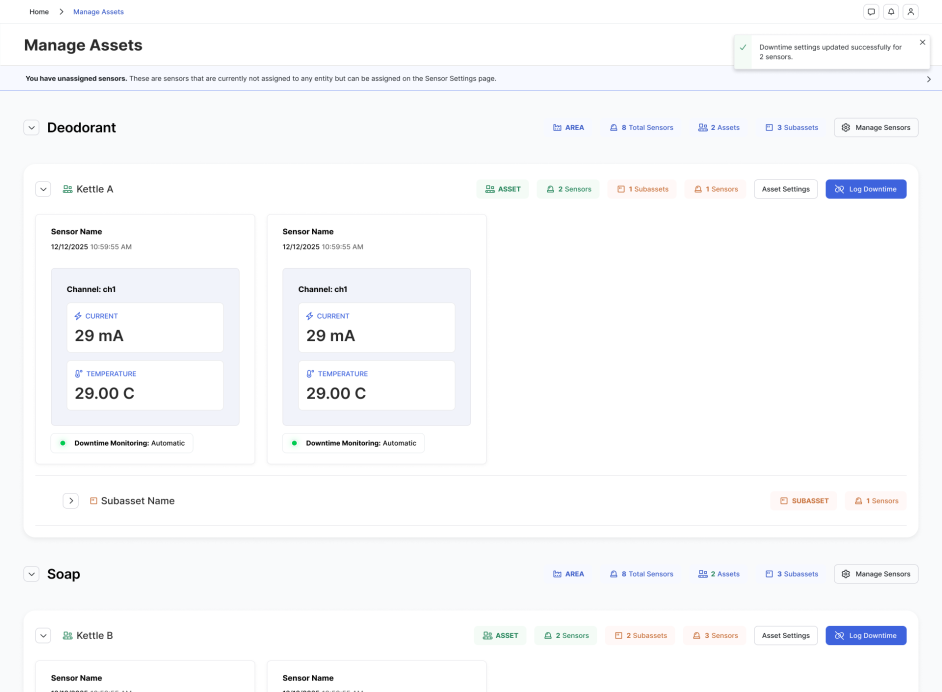
Live data from the equipment you run
Industrial IoT devices connect to the sensors and interfaces already on your kettles, cooling tunnels and filling lines through 4–20 mA current receivers.
They also read load cells, RTDs, VFDs and scales, with no new PLCs.
Each device installs in minutes over Wi-Fi or 5G.
Battery-powered devices last 3–5 years, or you can hardwire them.
Every reading is time-stamped against its batch step.
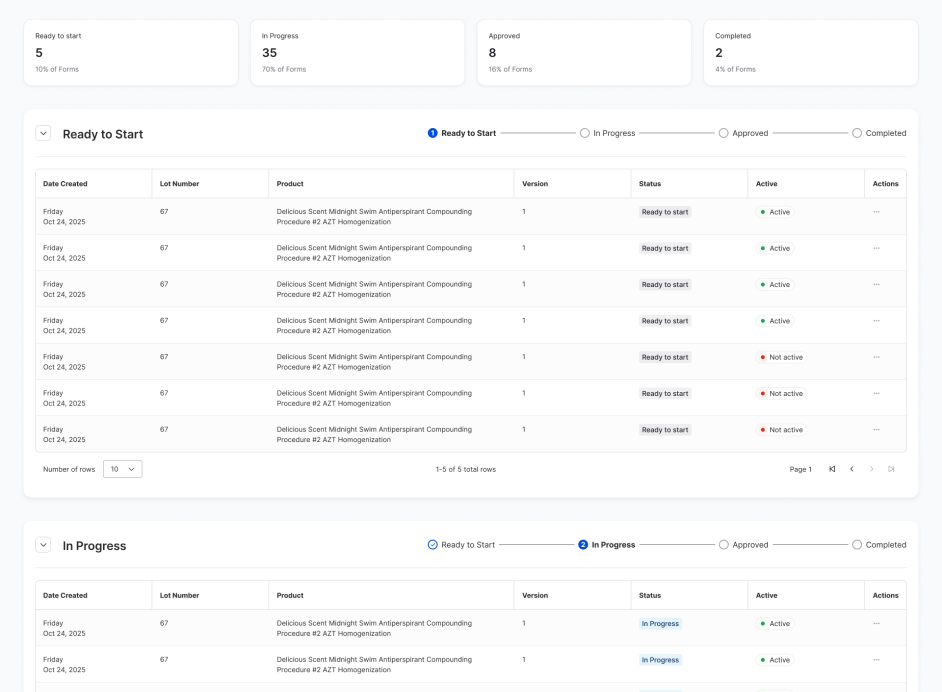
Digital batch forms
AI turns your existing PDF and Excel batch sheets into digital forms in about a minute.
Operators fill in tablet-ready digital forms that autofill from live readings and flag errors as they happen.
Formula updates reach every SKU at once, and lot tracking and QC retests are logged on the form.
Approvals, signatures and version control are built in.
From pre-weigh to QC to line clearance, every form is tracked, searchable and audit-ready.
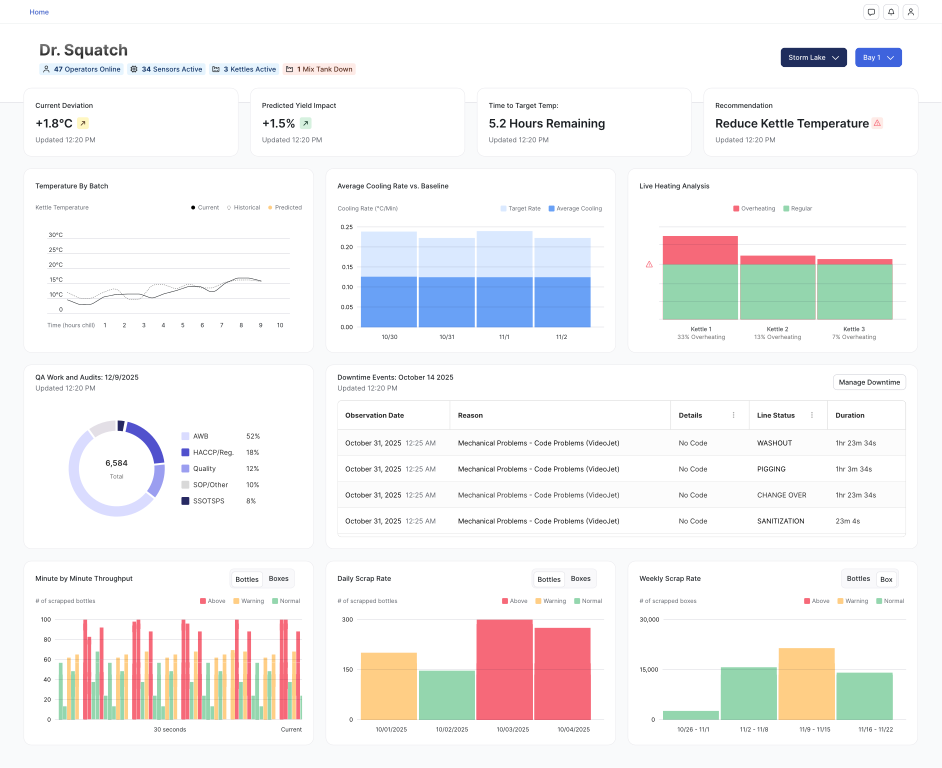
Dashboards and AI agents
Track batch status, active deviations, out-of-spec (OOS) results and OEE in real time.
See temperature, weight, pressure, speed, flow and timing for every batch as it runs.
When a threshold is hit or a limit is missed, Procense triggers alerts, escalations or approvals.
At the end of each batch, an AI agent checks the record and flags only the exceptions, so QA reviews what needs attention.
Procense's AI agents also find your golden batch, the settings behind your best batches, so you can repeat them.
Key results
Results at Dr. Squatch
Dr. Squatch makes its men’s personal care line in-house. Procense put sensors on its kettles and cooling tunnels and moved its batch forms to tablets. The Dr. Squatch case study reports three results.
30 minutes
Saved per batch
10% faster batch execution, with faster pre-weigh, compounding and QA approvals.
100%
Automated traceability
Better audit readiness through digital traceability.
100%
Data accuracy
Tablet-based forms that frontline teams run themselves, with no IT required.
We’re saving time and gaining confidence. It’s helping us grow production without adding more stress or paperwork.

Leticia Rodriguez
Lead Operator
Who it's for
Who Procense serves
Procense is built for process manufacturers that run in batches, from pre-weigh and compounding to filling and packaging, including the contract manufacturers that make products for other brands. Plant and operations managers use it to run those floors.
Chemical manufacturers
Recover reactor hours and catch quality issues mid-batch.
Procense reads the reactors, load cells and VFDs you already run, with no new PLCs and no double entry. Production and QC see the same live data, so delays get a root cause and off-spec batches get caught before they finish.
Personal care manufacturers
Shorter cycles and plant-wide OEE from live batch data.
Digital batch records capture every compounding and filling step as it happens. That gives you real cycle times and OEE, so you can free up capacity without adding temp labor.
Nutraceutical manufacturers
Fewer misblends, faster lot release, more output with the same team.
Weights and signatures are captured and checked at the step, so errors get stopped before they become scrap. QA reviews only the exceptions, and records stay inspection-ready under 21 CFR Part 111.
Batch records
Replace paper batch records for good
Move your team from manual tracking on clipboards and spreadsheets to tablet-ready forms that autofill and flag errors in real time.

The basics
What is an MES system
A manufacturing execution system (MES) tracks and documents the transformation of raw materials into finished goods, according to Wikipedia’s entry on manufacturing execution systems. In the ISA-95 model it sits at Level 3, between ERP at Level 4 and process control at Levels 0 to 2. Level 3 covers four kinds of operations: production, quality, logistics and maintenance. You will also see it called an MES system or an MES execution system; all three mean the same thing.
An MES creates the “as-built” record of what happened during production. That record matters most in regulated industries, where you have to prove how each product was made.
In a chemical, personal care or nutraceutical plant, the as-built record is the batch record. It shows which formula ran, which lots went in, who ran each step, what the instruments read, and which QA checks the batch passed. Many batch plants still keep that record on paper and re-key it into spreadsheets.
MESA, the industry association, defined 11 manufacturing execution system functions that set the scope of an MES. They include:
- Scheduling and dispatching production
- Data collection from equipment and operators
- Quality management and process management
- Product tracking and genealogy (lot traceability)
- Document control, labor and maintenance management
- Performance analysis
Some vendors sell these as separate manufacturing execution system modules, such as quality or scheduling. A batch plant needs them working on the same batch record.
Buyer's checklist
How to evaluate an MES system for batch production
A discrete assembly line counts units. A batch plant has to prove what went into each batch and what happened to it. For a regulated batch plant, the manufacturing execution system requirements come down to six criteria.
Electronic batch records
Formulas, lots, operator steps and QC retests should be captured on digital forms as the batch runs, with formula changes versioned by SKU and step times recorded.
21 CFR Part 11 and GMP
Every form, signature and system change should be version-controlled, time-stamped and easy to hand to an auditor, with approvals and electronic signatures on the record.
Existing instruments
Look for devices that read what you already have, such as 4–20 mA outputs, load cells, RTDs, VFDs and scales, so your kettles and filling lines stay in place with no new PLCs.
QA and deviations
Checks should happen at each batch step, with out-of-spec conditions flagged as they occur and the finished record reviewed by exception before QA releases the batch.
Time to go live
Ask how long sensor setup, platform configuration and form testing take. Procense’s go-live plan is under 15 days, and it reports deployment 50x faster than conventional ERP or MES.
IT effort
Ask who maintains the system, who updates a form when a formula changes, and how it connects to your ERP. At Dr. Squatch, frontline teams run the Procense forms with no IT required.
Before and after
Before and after Procense
Each pair shows one part of the batch on paper or a conventional MES, then with Procense.
Batch records on paper, typed into spreadsheets by hand
Digital batch forms filled in on the floor as the batch runs
Readings written down by hand, if anyone logs them at all
Live sensor data from your existing instruments over 5G or Wi-Fi
QA checks reviewed after the batch is already finished
Deviations flagged live, and AI reviews each record by exception
Rip-and-replace projects for new equipment and instruments
Devices on the instruments you already run, live in under 15 days
Implementation
Go live in under 15 days
Procense’s plug-and-play implementation has three steps.
step 1
Set up wireless
sensors
5–15 minutes per sensor
step 2
Configure the
platform
30 minutes to an hour
step 3
Configure and test
digital forms
About 7 days
FAQ
Frequently asked questions
What is MES in manufacturing?
In manufacturing, MES stands for manufacturing execution system. It is the software that tracks and documents production on the plant floor, turning a production plan into a record of what actually happened: which materials, which people, which equipment and which results.
What is MES software used for?
Plants use MES software to schedule and dispatch production, collect data from equipment and operators, run quality checks, and trace every lot from raw material to finished product. In a batch plant, the main output is the electronic batch record.
What is the difference between MES and ERP?
ERP plans the business: orders, inventory, purchasing and finance. It sits at Level 4 of the ISA-95 model. An MES sits at Level 3 and runs the plant floor, recording how each order or batch was actually made and feeding that back to the ERP. Procense captures actual weights, lot numbers, cycle times and yields at the step and passes them back to your ERP, so both systems work from the same batch data.
Does an MES replace your ERP?
No. The MES runs the plant floor and the ERP runs the business, so most plants keep both. Procense works alongside ERPs such as Deacom, Datacor, SAP and NetSuite and integrates with them.
What are the core functions of an MES?
MESA defined 11 MES functions. They cover scheduling and dispatching, data collection, quality and process management, product tracking and genealogy, document control, labor and maintenance management, and performance analysis. Procense covers the functions batch process plants rely on most: live data collection from equipment and operators, digital batch records and work instructions, in-process quality checks and deviations, lot traceability from raw material to finished goods, and OEE and cycle-time analysis. AI agents for planning and scheduling are built on the same data.
Does an MES need to meet 21 CFR Part 11?
21 CFR Part 11 is the FDA’s rule for electronic records and electronic signatures. If an FDA regulation requires a record and you keep it electronically, Part 11 applies to it. Procense is built for 21 CFR Part 11 and GMP from day one, with secure audit trails, electronic signatures tied to each user, and controlled changes to every record. Your team still validates the system for its intended use, and Procense supports that process.
How long does it take to implement an MES?
Implementation time depends on the system and the plant. Procense’s go-live plan is under 15 days: 5–15 minutes per sensor, 30 minutes to an hour to configure the platform, and about 7 days to configure and test digital forms.
Do I need new equipment or PLCs to use Procense?
No. Procense connects to the reactors, load cells, scales and VFDs you already run, using devices that install in minutes, so you can start collecting batch data without replacing controls.
What is an AI-native MES?
An AI-native MES has AI agents built in from the start, working from the same live record of every batch: material lots and weights, step times and signatures, live equipment readings, and QC results and deviations. In Procense, the agents review each batch record by exception, flag a batch drifting off spec while it’s still in the tank, and find the conditions behind your best runs. Your data stays in Procense’s secure cloud, built for 21 CFR Part 11 and GMP.